

Beyond the Box: Rethinking the Contemporary Commercial Tower
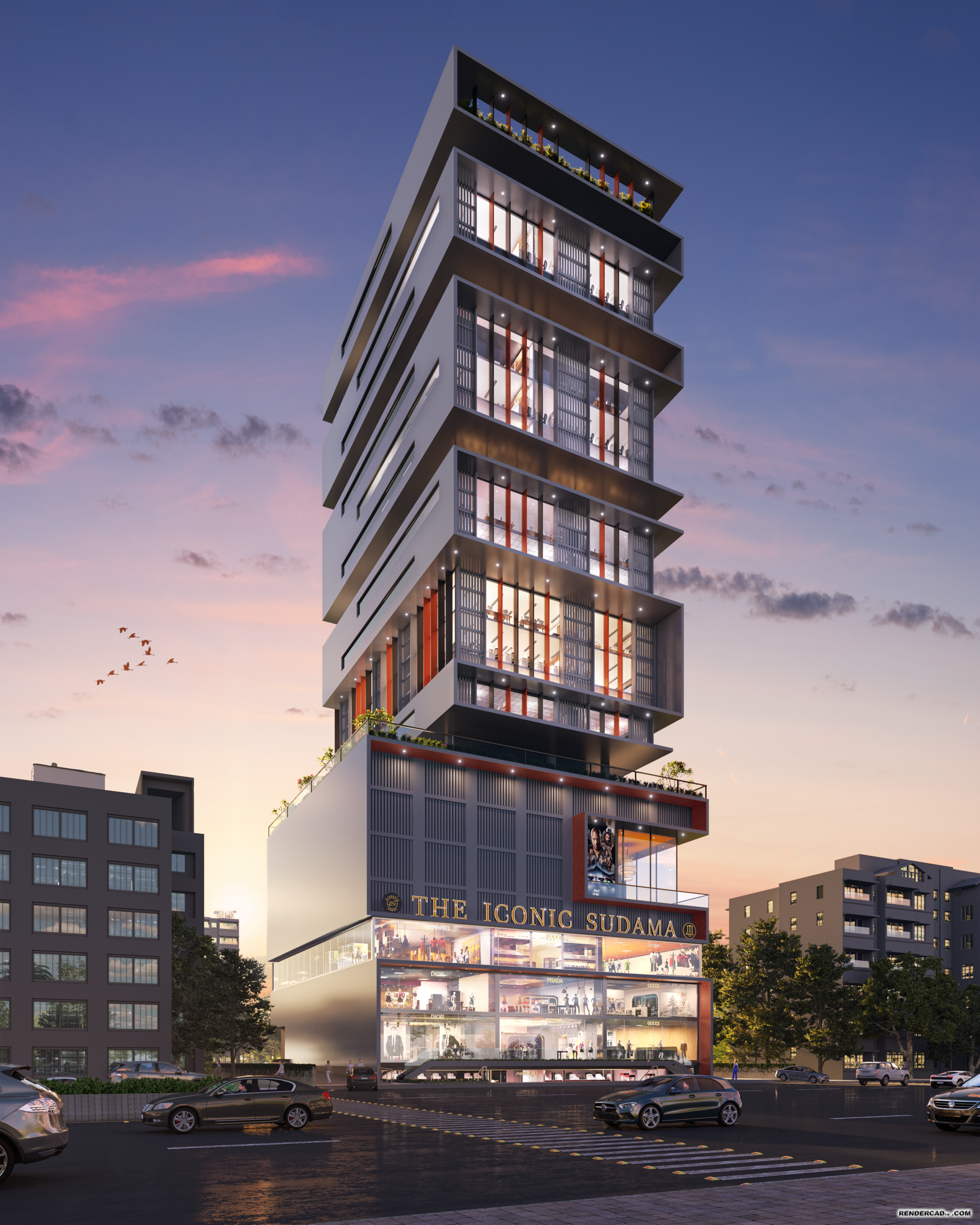
The world we live in is all about business. With globalization on an all the time rise, boundaries have blurred, competition has intensified and every interaction personal or professional, carries an undertone of value, exchange and opportunity.That being said, the potential of commercial architecture to be more and beyond structures is soaring to new heights- both figuratively and literally. A catalyst for interaction. A landmark within the city fabric.
Offices and retail spaces have the need now to be not just functional spaces, but strategic tools designed to attract, engage and maximize economic potential. Now is the opportunity to break the box, to be “ICONIC”.
With the growing urbanization of tier 1 and tier 2 cities, buildings now rise vertically rather than spreading horizontally. They’re compressed and layered. With this comes their stacked identity where multiple programs coexist within a singular architectural narrative.
At base a retail requires permeability, visibility and approachability. The office spaces in the middle require functionality efficiency, collaboration and repetition. The upper floors serve leisure with luxury and exclusivity.
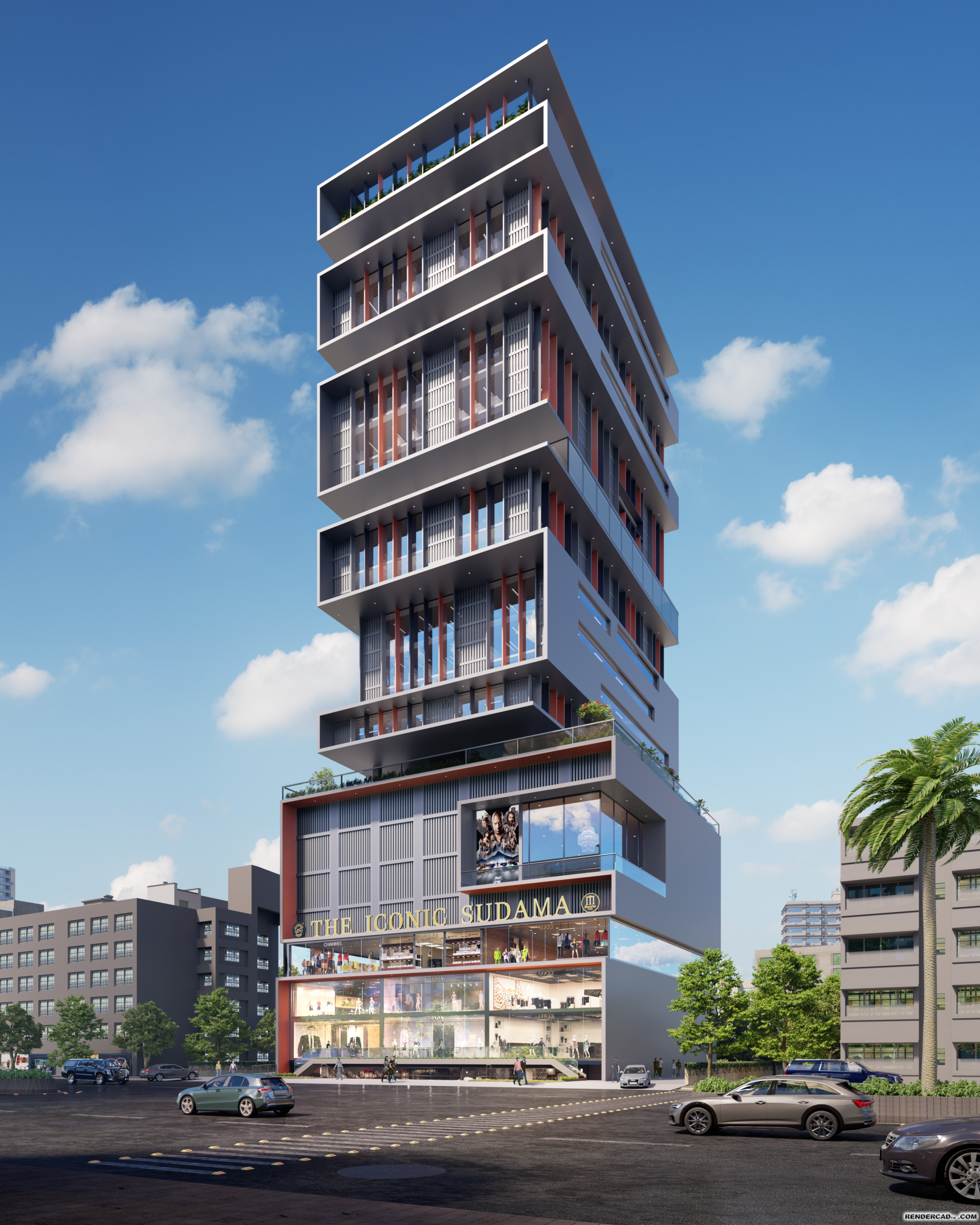
While these are all isolated functions, a stacked commercial building, brings them under a singular roof, integrating them in a vertical cohesive narrative. The facade becomes a story telling tool, with change in materials, textures, openings and proportions catering the function. The conventional glass box while still works and serves the purpose, it no longer is as relevant. Architects’ vision has now shifted to exploring layered fragmented volumes. The idea is to create a visually dynamic and memorable commercial space. Stepped massing further creates a striking architectural appeal while generating unique terraces that enhance the quality of outdoor spaces within the development.
The design doesn’t just serve aesthetics but also responds to light, ventilation, circulation and the urban context. A fragmented mass caters the human scale, making the space more approachable and engaging in an already overwhelming urban setting. The ICONIC Sudama, a commercial hub coming up in the heart of Nagpur city, is a building MQA designed with the intention of “breaking the box”. The challenge of achieving this stacked identity within narrow site conditions became a defining aspect of the design process. Space constraints, site orientation, the retention of the old retails and the incorporation of additional commercial office spaces shaped the evolution of the project, redefining it into a contemporary commercial identity.
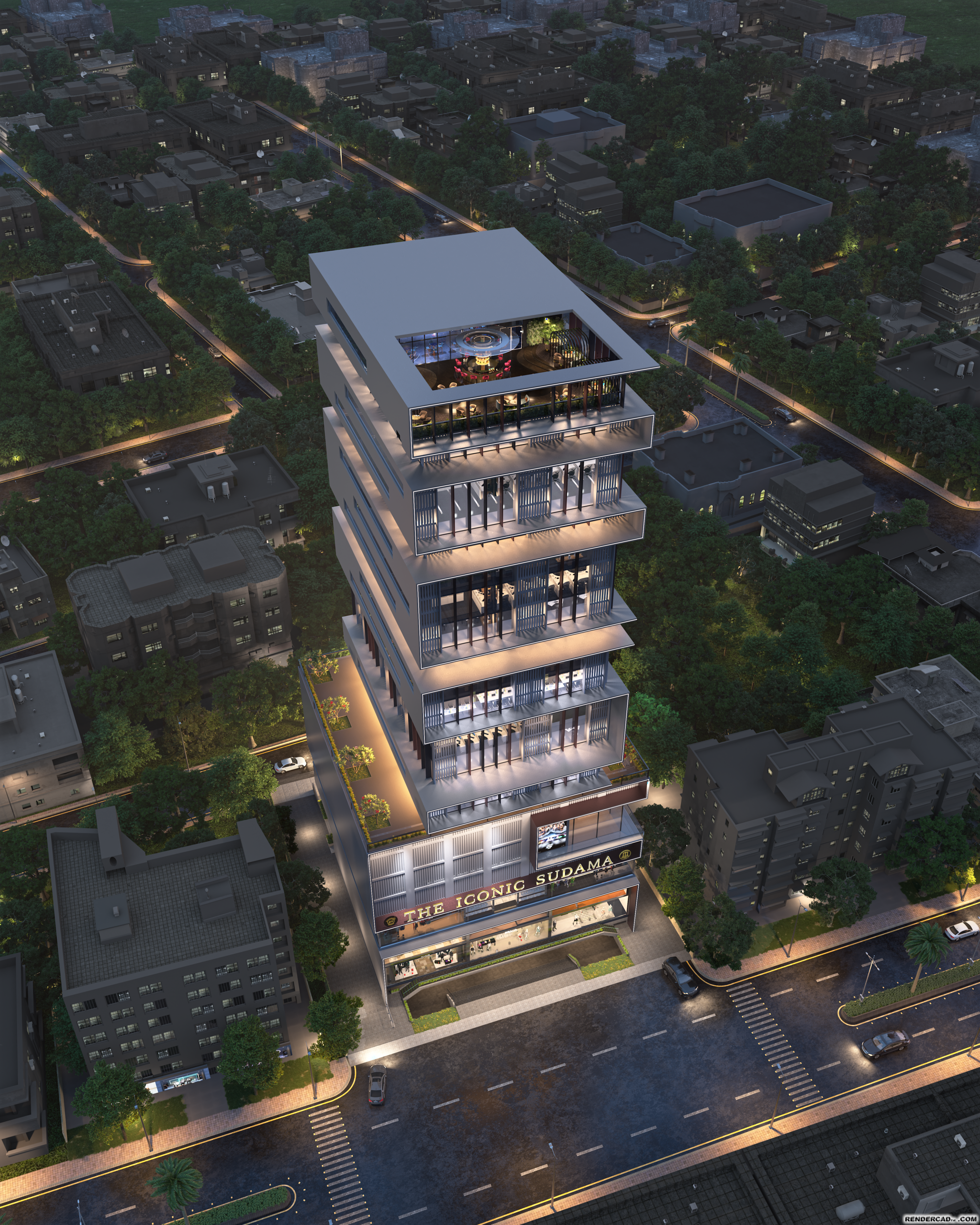
Balancing existing retail requirements while maximizing office spaces became central to the planning strategy. Beyond creating a strong visual identity, the design seeks to reduce its environmental footprint through passive design strategies and efficient building performance. The building’s layered form creates opportunities for shaded outdoor spaces and carefully calibrated openings contribute to a more comfortable and environmentally conscious workplace.
In this context, architecture became choreography- shaping how people move, pause, interact, use and remember the space. The result- A story unfolding in a layered vertical journey. We rejected monotony and embraced the complexity of the functions the structure was to serve.
The challenge was to draw people upwards. Vertical spaces require engagement of people on every level. Deliberate strategies like viewing decks, double height spaces, placing anchor functions strategically helped. Starting from retails floors on the lower levels then rising up to a multilevel restaurant and culminating in office floors above, each level offers a distinct yet connected experience, encouraging exploration. The movement from ground to sky would feel intuitive and experiential. Meeting parking requirements added another layer of complexity, demanding a careful balance between functionality, efficiency and the aspiration to create a landmark that would truly be ICONIC. Ultimately The ICONIC Sudama would be a seamless dialogue between legacy and modernity.